BPCM at IACC: Christian A. Biniat speaks on software piracy as a cybercrime vector
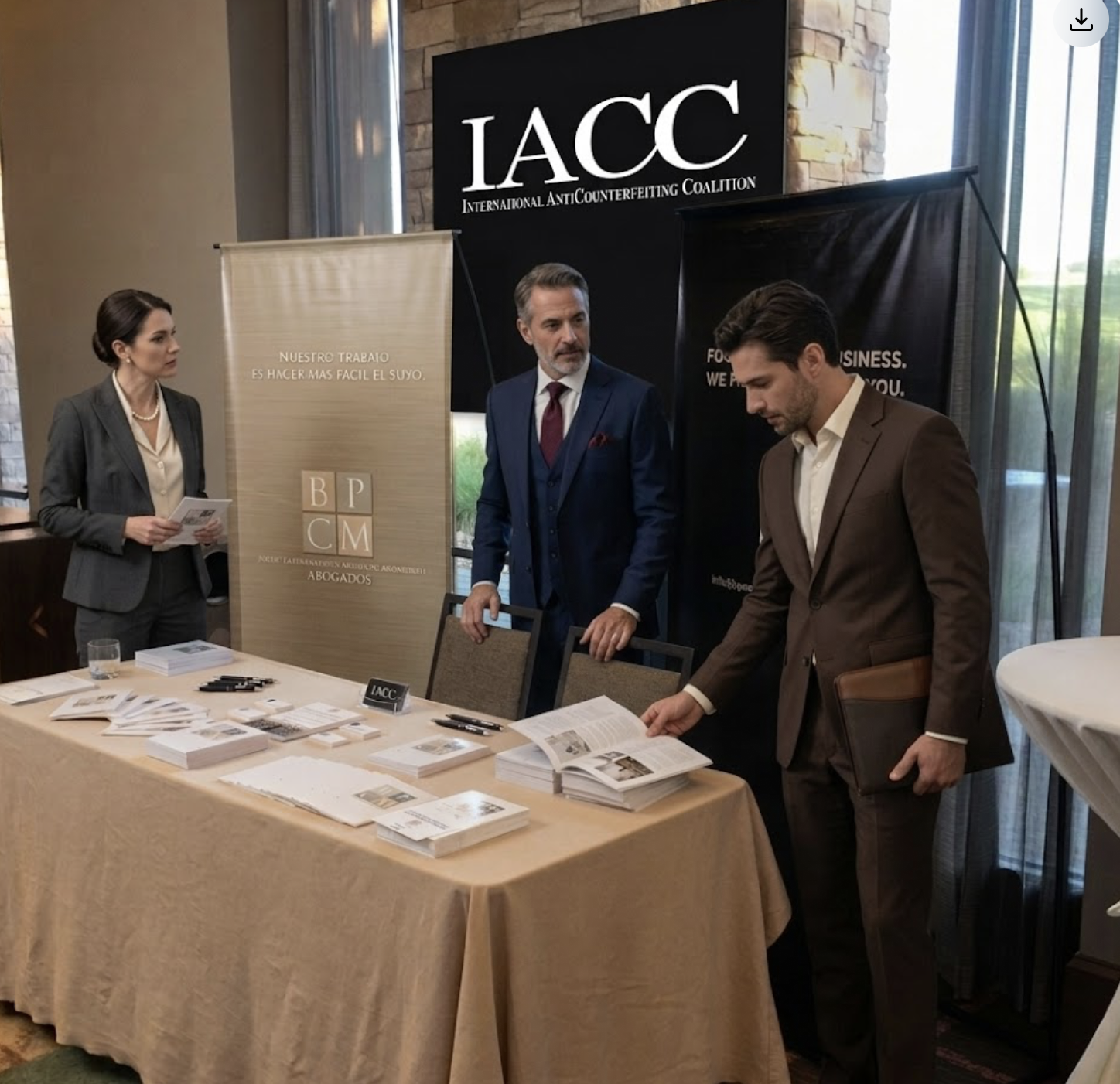
BPCM Abogados took part in the International AntiCounterfeiting Coalition (IACC) gathering held in Phoenix, USA, the global network that brings together brand owners, enforcement authorities and IP specialists to coordinate the fight against counterfeiting and piracy. In that setting, Christian A. Biniat spoke on software piracy, cybercrime and the role of the judiciary in pursuing the first link of the criminal chain.
The presentation, prepared by Dr. Biniat from more than two decades of work in the protection of intangible assets and cybersecurity alongside public agencies and technology companies, proposes a shift in perspective: stop treating pirated software as a marginal intellectual property issue and recognize it as a privileged malware vector with systemic impact on sensitive data, critical infrastructure and trust in institutions.
1. The criminal-law relevance of 'cracks'. Global studies from The Software Alliance (BSA) with IDC estimate that a very significant share of software installed on personal computers worldwide is unlicensed, and that organizations face a roughly one-in-three probability of encountering malware when obtaining or installing software without a license. The costs of handling those incidents reach hundreds of billions of dollars per year for the private sector.
Specific research confirms the link between piracy and malicious code. Microsoft-commissioned studies in Asia Pacific showed that a relevant share of sites hosting pirated software downloads systematically exposes users to malicious programs. Recent academic work in Southeast Asia analyzed hundreds of pirated copies and found infection rates of around 30–35% for certain malware families, especially adware and trojans. Firms such as Trend Micro describe campaigns in which the main lure is the offer of cracks or free installers spread through YouTube and search engines, which actually download encrypted payloads to steal banking credentials or prepare ransomware attacks.
A shift in judicial perspective. From a judge's standpoint, these findings reposition the developer and distributor of a crack: not a marginal actor at the edge of copyright, but, in many cases, the first operational link of a transnational criminal enterprise. The goal is no longer to avoid paying a license fee, but to gain control over thousands of machines to extract credentials, financial data, medical records and corporate or government information. The internet distribution model makes the locus of the offense intrinsically transnational: server in one country, command-and-control infrastructure in another, operators in a third and victims spread across dozens of jurisdictions.
International instruments reflect this reality. The Budapest Convention on Cybercrime harmonizes national legislation, facilitates investigations and requires 24/7 contact points. More recently, the UN global cybercrime convention reinforces cooperation to investigate ransomware and online fraud. Pursuing cybercrime at its origin requires specific attention to the production and distribution of pirated software and cracks, because that is often the initial vector enabling the global proliferation of attacks.
2. Malware detection in pirated copies: a framework for forensic experts. Dr. Biniat's presentation offers a synthetic framework to guide malware detection when the object of analysis is a pirated copy. Predominant categories include remote access trojans (RATs), infostealers — extracting credentials, cookies and crypto wallets — and loaders/droppers that fetch new payloads in the background, including ransomware. The typical flow has the user run what they believe to be a legitimate or cracked installer while, in parallel, the program downloads an encrypted file from a hosting service that installs a credential stealer and opens a door for further intrusions.
The forensic approach is structured in three planes: integrity verification against the legitimate version (SHA-256 hashes, digital signature, code-signing certificate); static analysis of the binary without executing it (multi-engine scanners, string extraction, PE header inspection, structured code reading with disassemblers such as IDA or Ghidra, attention to the import table, in-memory decryption routines and code-injection indicators); and controlled dynamic analysis in a virtual machine or isolated sandbox, following NIST guidelines, recording executables created, persistent registry changes, outbound connections to unknown domains and injection attempts into legitimate processes.
3. Attribution and transnational reach. Once malware is established, the focus shifts to attribution, working on three levels: infrastructure analysis from network traffic (DNS, WHOIS, ASN, hosting providers); classification of the malware family from signatures, behavior patterns and reused code; and context and activity patterns from prior campaigns, admin-interface language, binary compilation times and victim profiles. Even when it is not always possible to name a group, the result is a solid technical and legal narrative that ties pirated software to organized criminal structures.
Conclusion. Software piracy has shifted from being a purely economic or IP issue into the systematic entry point of the most serious forms of cybercrime. Pursuing only the final manifestations — ransomware, fraud, extortion — while ignoring the production and distribution of cracks means abandoning the initial link of the criminal chain. BPCM's presence at IACC and Dr. Biniat's presentation reaffirm the firm's commitment to a legal-technical approach that integrates intellectual property, cybersecurity and international cooperation in service of clients and authorities.
Source: Christian A. Biniat, presentation prepared for the International AntiCounterfeiting Coalition (IACC) — softwarelegal.org.ar/pirateria.html.